Teaching Motor Programmes
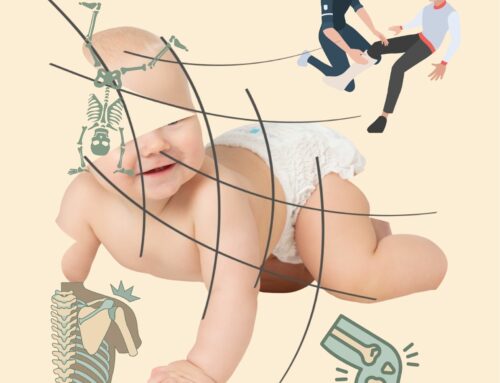
A Motor programme can be defined as: “ A set of motor commands that is pre-structured at the executive level and that defines the essential details of a skilled action ” (Schmidt & Wrisberg 2000). Teaching motion / motor patterns and therefore movement patterns, like any other skill is a progressive process. Whether an elite performer is re-grooving motor patterns, or an adult is engaged in the rehabilitation process a similar process can be used. A foundation of basic movements must be developed long before any special skills are grooved. Consider the most basic skills for locomotion or simply moving from one place to the other. Then consider basic manipulation skills where objects are moved with the hands and feet. On top of these skills are the proprioception awareness and sensory awareness of skills of vision, auditory and tactile awareness and processing which must be challenged to optimise reaction time, body position etc. Spatial and joint position awareness together with processing of vestibular information assists in ensuring balance so that subsequent optimal force can be developed and optimally directed. Returning astronauts are a poignant example of what happens when the constant challenge of training motor skills is neglected for a short period of time. They have difficulty walking and balancing. While there is much evidence about the best time to develop each of these skills in developing children, they still must be continually re-affirmed in adults.
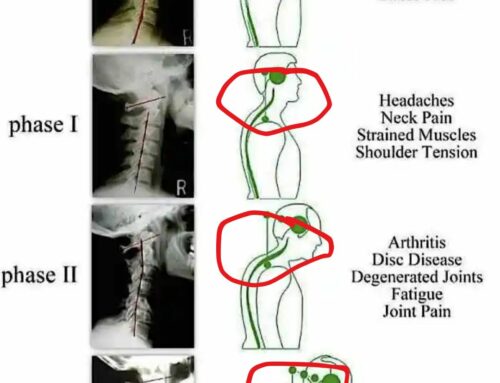
As with astronauts clients could have a poor motor programme, your goal will be to correct this dysfunction. Once the nervous system is engrained with a programme it is difficult to correct. While is takes 300-350 reps to build a motor engram, it takes 3000-5000 reps to rebuild (Schmidt, 1991) Don’t forget they can also create faulty ones so always remember to follow the form principle.
The Form Principle – “Train only with correct form. Stop exercise 1 or 2 repetitions before form breaks to avoid reinforcing faulty motor patterns and to prevent injury”
Primal Patterns
According to Schmidt (1999) everyone has generalised motor programmes that share common invariant characteristics and provides the basis for controlling a specific action within the class of actions. All movement can be broken down into 7 fundamental movement patterns (McGill, 2006) which can be known as Primal Patterns (Chek ,1999), these are:
1. Squatting
2. Lunging
3. Bending
4. Pushing
5. Pulling
6. Twisting
7. Locomotion
Primal Patterns and 3 levels of Ascent and Descent
Teaching each Stage of a Motor Pattern or Motor Skills
The stages of learning a motor skill / pattern are (McGill 2006) ; Albernethy 2005):
Verbal / Cognitive Stage:
• Individuals use environmental cues, and past experiences.
• Individuals trying to learn a new skill
• Old habits are shaped into new patterns
• Visual verbal clues are more important than proprioception cues.
• Coaching is continually needed to highlight differences between new and old skill.
Motor Stage / Associative Phase:
• Effective movement is obtained which becomes constant.
• Individuals are able to identify their own mistakes.
• Proprioception feedback is more important than visual feedback.
• Individuals fine tune new movement pattern.
Autonomic Stage:
• Movement “happens” on its own.
• Movements become independent of the attention demands.
How to utilise the knowledge of the stages to be the most effective therapist.
Cognitive Stage:
• Use your hands to place the client in position.
• Have them use their own hands.
• Remember that you cannot activate what you cannot feel.
• Repeat until they can achieve optimal positioning on their own.
Motor Stage:
• Once the client can find their own optimal position then practice and more practice to groove the new pattern.
• Have the client perform the exercise and movements at home and don’t forget the FORM principle.
Motor Programme Exercis
As these patterns are in the pelvic and spinal neutral, the question is when and how do we start to intergrate patterns that enable us to flex our spine and therefore train our ligaments? This may be important as when we come out of our comfort zone e.g. a child falls and you reach down to catch him you will then incorperate flexion into your spine. In most textbooks it is stated that lumbo-pelvic rhythm exists and there is spinal flexion during the first 60 degrees of a forward bend followed by flexion of the hips. McGill refutes this suggestion and states that the spine and hips don’t move independantly and that the opposite is true in olympic lifters, who rotate about their hips, as a guide no one should go to full flexion where possible. As a guide Paul Chek recommends that when you can lift a weight 20 times with no pain in a neutral position then you can start training your ligaments and flexing your spine.
Conclusion
As we can see if a client has a faulty motor pattern this can predispose them to injury or reduce their improvements in rehabilitation due to muscular imbalances and faulty muscle recruitment. It is imperative that early in the rehabilitation stage that this be identified and correct motor patterns introduced and grooved so that the client has less chance of further muscle imbalances and therefore injury. It can be beneficially to start the clients day with motor pattern exercise and then follow up with mobilty exercises if necessary.
Bibliography
Paul Chek